 Kanchan Balani
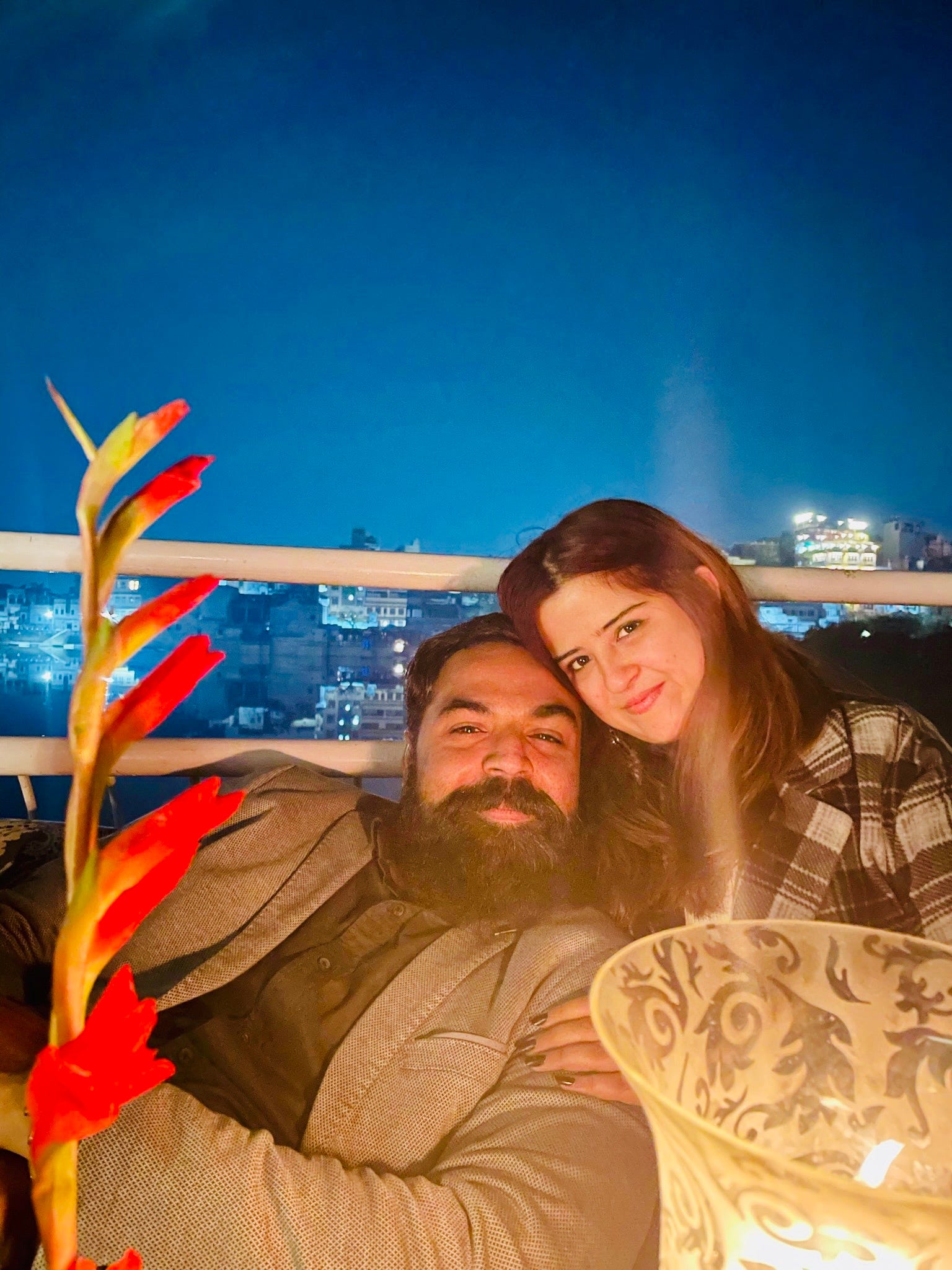
Hansal and I’ve been together for more than 12 years. We started dating in 2014. This number includes, and I feel the need to be precise about this: an ‘on a break’ period of almost two years. But even that necessary distance became part of the togetherness eventually. It became one of its layers. So, in this decade-plus of being each other’s person, we have done a lot of ordinary living together. We’ve travelled to multiple cities/countries, trekked at high altitudes, gotten gloriously high in Chiang Mai, quit smoking together. We finished our Master’s degrees in the thick of building a life simultaneously, gotten married, adopted and raised two handsome cats. We’ve changed jobs, started something of our own, quit our hobbies and found our way back to them, slowly turned a space into a home. We’ve lost our grandmothers and grieved together. We’ve sat together through health scares, through 2 am anxieties, through the kind of heart-crises that take up entire seasons.
12 years. But, sometimes it feels like a single, uninterrupted breath.
In all of this time, we’ve also watched each other become different people. Everyone talks about growing together, but the thing is you also grow separately, as individuals. What felt right a decade ago, what we built our early understanding on, may not sit the same way with us anymore. And so, naturally, when the old patterns creep up, which they always tend to, how does one navigate the way forward?
Once, while discussing a certain domestic situation with my mother, she said, “Everyone has to adjust a little, beta. Har waqt aise apni zid nahi chalate.”
Now mind you this was coming from someone who’s always tried to ‘do it all’. A banker by profession, a wife, a daughter-in-law, a mother to two unruly kids. She was, by every definition, a superwoman. And I say this with so much love. But here’s what we’ve come to understand about superwomen: when one person is carrying everything, it means the load was never equally shared to begin with. That kind of imbalance, sustained quietly over years, has a way of becoming resentment. And resentment is funny that way. It seeps out sideways, in a sharp word here, a particular silence there, in finely practised passive aggression. I thank the universe for my grandmother, honestly. She was the force who maintained the peace between my mother and me during my rebellious teenage years, absorbing what she could, softening what she couldn’t.
Back then I couldn’t understand my mum, but now I do. She had too much on her plate. When you’re holding that much, when you’re that depleted, patience runs thin, words come out wrong, and the people closest to you bear the weight of everything.
But when you’re growing up, you absorb so much without realising. As a child, you learn what love looks like, what conflict looks like, how anger gets expressed, and how it gets swallowed. You learn which emotions are acceptable and which ones get tucked away. And then you grow up and carry all of it into your own relationships, your home, and your arguments.
A lot of adult life, I’ve come to realise, is just becoming aware of these patterns, often in therapy. And then the longer, harder work of unlearning them.
Take cooking. I grew up seeing every meal in my home cooked by women. It was simply taken for granted, never questioned. And that, I think, is the numero uno reason I spent most of my life hating it. Not the act itself, but what it represented. A life skill everyone should ideally know, and yet I couldn’t even bring myself to step inside a kitchen because it felt like a punishment.
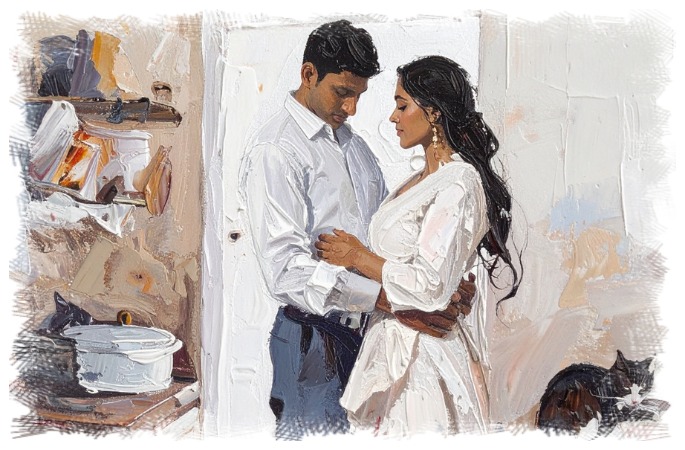
That changed, slowly, after I got married. Hansal is an excellent cook. Cooking is therapeutic for him. I’ve watched it make him visibly happier. He gets excited about learning new recipes. Imagine! Growing up, it was a shared activity in his home, something his parents did together without it being anyone’s designated responsibility. We came to the kitchen carrying entirely different memories. And over the years, some of his relationship with it has become mine too. I’ve finally started to find small moments of joy in it.
But then take financial planning and investments, and Hansal detests it. I, on the other hand, grew up loving it. A banker’s daughter through and through. My mother gave me two gifts that I didn’t fully appreciate until much later. The first was a diary when I was about 12 or 13 to track every rupee of my monthly pocket money: expenses, savings, all of it written down. Even if it’s ten rupees, you put it down, she’d say. The second was a bank account, a passbook I was given. She helped me start an RD right before the first year of my college, as soon as I started my first part-time job as an educator. And I absolutely loved those trips to the bank. The seriousness of managing something that was mine. She taught me how being financially independent was the biggest freedom of all. A couple of years into our marriage, and my financial planning methods rubbed off on Hansal. He’s picked up a thing or two.
Recently, while visiting a friend, her mother turned to me with genuine curiosity and asked, “Beta agar aap running pe jaate ho toh fir subah tiffin kaun banata hai?” Before I could even answer, Hansal said simply, “Aunty, we have a cook. Aur mera tiffin toh main khud hi pack karta hu.” He added that I also work, that we try to balance things out as much as possible.
And let me tell you aunty didn’t look entirely convinced. There we go again with cooking and women and it feeling like a punishment.
But here’s what I keep coming back to: my mother, my friend’s mother, me, all of us are products of the same patriarchal system. Who’s to blame? Babasaheb argued that patriarchy and caste system were not separate structures but deeply intertwined.1 That controlling women was, in fact, central to preserving caste. The conditioning runs that deep. It isn’t a personal failing. It’s architecture. And architecture is hard to see when you’ve lived inside it your whole life.
In the process of trying to build an equal partnership, so much tends to get in the way. Sometimes it’s society. Sometimes it’s our baggage from our childhoods and past relationships. Sometimes it’s the version of ourselves that was formed long before we had any say in the matter. Patriarchy doesn’t loosen its grip just because a woman has a salary. It simply adds the job on top of everything she’s already expected to carry, and then looks at her sideways if she seems tired.
Are you even a good wife, the room seems to ask, if you don’t have a handle on the domestic situation?
And this isn’t just about class or education. Across castes, across incomes, the messaging hasn’t changed all that much. In upper and upper-middle class homes it’s just more subtle, but it’s there. It’s always there.
What gives me hope is this: after more than 30 years of working, post retirement, for the first time in decades, my mother, now in her 60s, finally has time that belongs only to her. And she’s using much of it to look inward. To notice the patterns. That, to me, is huge. But patriarchy’s hold is sticky. You can’t unlearn it once and be done with it. You have to keep choosing and keep doing the work. Again and again, at every stage of life.
It makes me think of what my trainer says about boxing: you can’t just learn the stance once and forget it. You have to keep showing up, keep practising, keep correcting, or the body defaults back to what it knows.
Neither Hansal nor I have fully unlearned everything we carried into this relationship. Both of us are still in the middle of becoming, shaped by conditioning we didn’t choose. We are very much aware of it. And we are aware too of each other’s triggers. Which is its own kind of intimacy.
That massive argument I mentioned in the beginning? I’ve stopped thinking of it as a rupture. Meaningful friction, I do believe, is a sign that two people haven’t quietly resigned themselves to each other, but are still invested enough to push back, to say: this doesn’t sit right with me anymore. Conflict, when it comes from that place, is how a relationship stays honest. The fights that scare me are not the loud ones. They’re the silent ones, where one person has stopped bothering.
We haven’t stopped bothering. 12 years in, that still feels like everything.