
 Richa Walia
The First Conflict
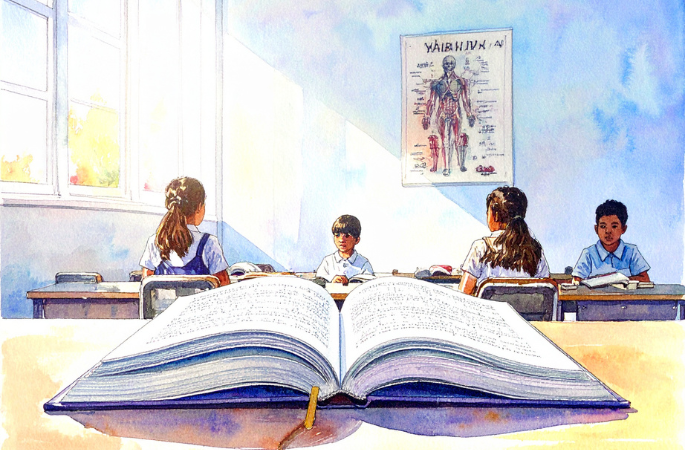
It is a sociologist’s blight to avoid reflecting on the newspaper headlines about incidents of sexual harassment, substance abuse and the rise in cases of unwanted teen pregnancy. While disentangling the enigma, my mind was blown when a young inquisitive mind indicated to his male genital and questioned, Mummy, what is this, and why is it not mentioned as a body part in the book? It took over my attention, and it was noticed that the word breast was substituted with chest, and in the picture, male and female genitals were omitted in his textbook. In everyday vocabulary, we use euphemistic names for human genitals, like ‘private parts’ or ‘down there ‘. Is it because we have to tell our children about their bodily functions? Or is it because it brings ignominy? Taking their actual names is regarded as a taboo.
The Silent Curriculum
Oblivious about my little one’s question, textbooks were referred as to what age sex education is imparted to our children. The analysis of books astounded me as sex education is taught typically at the age of twelve and thirteen when most children have already entered adolescence. One fine day, teachers and parents bombarded heavy biological lexis, educating children about the menstruation cycle; boys are not even privileged to be given education on bodily and sexual changes. In order to understand the ignominy related to sex education, a few interactions were made with the students. Students revealed that, by and large, the reproductive part had been partly taught in the schools. The male students said the teacher taught us about menstruation hesitantly and skipped the male reproduction part.
Female respondents reported that their education about menstruation was often confined to menstruation being a monthly phenomenon causing bleeding in women for five to six days. They further added that many students were giggling when the instructor was teaching about reproduction. The lack of comprehensive education on menstruation among Indian females could lead to trauma and confusion. Therefore, it is pertinent to discuss menstruation and the problems associated with it, such as dysmenorrhea, menorrhagia, metrorrhagia and pre-menstrual symptoms, such as mood swings, bloating, etc. Further dialogues about safe sex, teen pregnancy, and contraceptives are vital to avoid the problems of unwanted teen pregnancy, UTI, HIV-AIDS, etc.
Taboos, Misinformation, and the Cost of Ignorance
Undoubtedly, in a social-cultural milieu like ours, it is difficult for an instructor to impart sex education using appropriate words which must be aligned with social norms, or else, they have to face resentment from parents. Moreover, the instructor is socialized in the same socio-cultural setting and views reproduction as sacrosanct and pre-marital sex as a felony. Males are more vulnerable when it comes to awareness regarding sexual maturity. They are struggling with erections, sperm production and sexual interests, which are unmentionable topics to discuss, and we often blame them for being shamelessly watching porn videos. Whose responsibility is to guide the bodily and emotional changes? It’s time we comprehend that learning about our bodies is not a matter of shame.
Rewriting the Narrative
It is time to introduce the full spectrum of hidden anatomy in books and full-fledged adolescent changes in the chapters of books. We must teach our boys and girls how, where, and when to express their emotions and how to respond to these emotions. It’s high time we should adopt an open and inclusive approach to sex education. Educators play an imperative role in this, and we need their support to bring about a major modification in our educational system related to sex education. Also, parents must be sensitized to cater the needs of their children.
The tailor-made programmes regarding sex education for children and adolescents involve basic knowledge of the body, including bodily changes and an appropriate name for body parts. Further, awareness about the legal aspects involved must be imparted in the school. The inclusion of sex education in the school’s curriculum can contribute to creating gender sensitisation, and the proper knowledge may help in curbing cases of sexual crimes.