
 Swarnavel Eswaran
The Unflinching Gaze: A Homage to Kunthavai’s Enduring Legacy
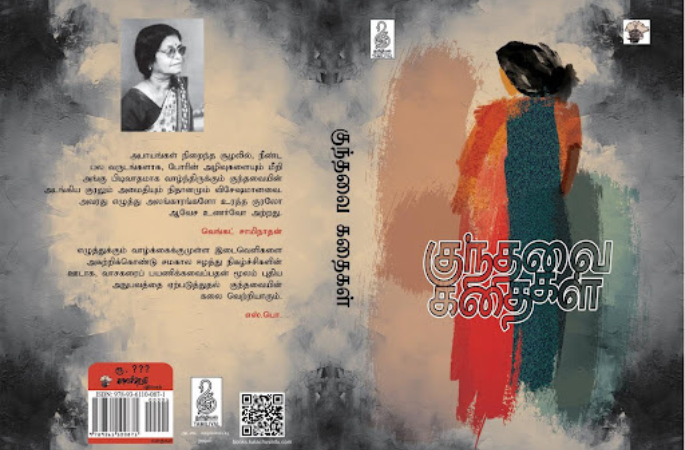
Kunthavai. Kunthavai Kathaigal (Tamiliyal and Kalachuvadu Pathippagam, 2025)
Review by Swarnavel Eswaran
From a land of salt and sorrow, where the sea whispers histories the shore cannot forget, a voice emerges. It does not arrive with the roar of cannons but in the quiet aftershock, in the space between the last explosion and the next. It speaks with the voice of a fisherman waiting by the shore as darkness swallows the horizon, with the voice of a disabled man on a stone at Paranthan junction, waiting for a bus that is a metaphor for a peace that is always yet to come. It remembers the taste of porridge poured by a father on a lorry, a moment of grace before his head is severed from his body by a shell. This is the world of Kunthavai, a universe held in a fragile, resilient quietude, where every story is an act of witness against the deafening, screaming erasure of war. To enter her prose is to enter this stillness, to sit with her characters by the shore of their collective memory and to gaze with them, unflinchingly, at the wreckage of history. A new, definitive collection, Kunthavai Kathaikal (குந்தவை கதைகள்), brings together the formidable short stories of this literary titan. Jointly published by Tamiliyal and Kalachuvadu Pathippagam, this anthology compiles 35 of her poignant tales, offering readers a glimpse into the lives, struggles, and quiet resilience of the Tamil people in Sri Lanka.
Born as Rasarathinam Sadadcharadevi in 1941 in the coastal town of Thondaimanaru, Jaffna, her chosen name is a poetic and political statement in itself. The name Kunthavai, meaning “the sweet scent of jasmine,” also recalls the famous Chola princess from Kalki’s epic novel Ponniyin Selvan, a character renowned for her wisdom, political acumen, and serene strength—an influential advisor to emperors. This dual meaning seems no accident; it signals an authorial persona that embodies both a fragrant, enduring grace and the quiet, commanding dignity found in her prose, a voice that advises and bears witness, even when the world is not listening. Her literary journey began in 1963, and her work is often categorized into three distinct periods: her early stories of the 1960s, marked by sharp social realism; her return to writing in the 1980s amid burgeoning conflict; and her most prolific phase, which chronicles the profound impact of the Eelam wars. Her literary prowess was formally recognized with the ‘Northern Provincial Governor’s Award’ in 2008.
The Angel of History’s Gaze: Confronting the Wreckage

To read Kunthavai is to understand the posture of Walter Benjamin’s “Angel of History.” In his famous thesis, Benjamin describes an angel, his face turned towards the past, who sees a single catastrophe that keeps piling wreckage upon wreckage before his feet. A storm, which Benjamin calls “progress,” propels him irresistibly into the future, to which his back is turned while the pile of debris before him grows skyward. Kunthavai’s characters are these angels, perpetually gazing at the detritus of their history. The storm of Sri Lanka’s civil conflict has propelled them forward, but their gaze is fixed on the rubble of what has been lost.
This is poignantly captured in ‘Neetchi’ (நீட்சி), where a schoolboy is haunted by the image of his father’s death during a shelling. Here, we see not just historical wreckage but what trauma theorist Cathy Caruth calls an “unclaimed experience.” The event is not a memory to be recalled but a wound that continues to speak in the present.
“‘சண்டை நாள்களில் கஞ்சி வாங்க எண்டு லொறிக்கு முன்னாலை வந்து நிண்ட சனங்களுக்கு, இவன்ரை தகப்பன் லொறியில் ஏறி நிண்டு கஞ்சி வார்த்துக் கொண்டிருந்தாராம். அப்ப ஷெல் அடியில் அவற்ரை கழுத்துத் தெறிச்சுப் போச்சாம். கஞ்சி வரும்வரை காத்திருந்த இவன்ரை தாயும் இவனும் ஏதோ பறக்கிறதைப் பார்த்தாங்களாம். ‘என்ன பறக்குது பார்’ எண்டு சொல்லிப் பார்த்தார்களாம். பிறகுதான் தெரிஞ்சுதாம் அது அவன்ரை தகப்பன்ரை தலை எண்டு” (pp. 233-34).
“During the days of fighting, while his father was on a lorry pouring porridge for the people who had gathered, a shell came and blew his neck off. His mother and he, who were waiting for the porridge, saw something flying. ‘Look, something is flying,’ they said, and then they realized it was his father’s head.”
The boy cannot turn away from this image; it is the pile of debris at his feet. The trauma is not processed into a coherent narrative but returns as a recurring, unassimilated horror. Kunthavai’s genius lies in presenting this confrontation without sentimentality, forcing the reader to witness the angel’s unflinching gaze as it beholds the “unclaimed experience” of its past.
The Echo of Neithal and the Waiting for Peace-to-Come
The landscape itself becomes a primary testament to loss. To read Kunthavai’s work is to hear the ancient echoes of Sangam poetics, specifically the neithal thinai—the landscape of the sea and the seashore. As A.K. Ramanujan detailed, these “interior landscapes” are not mere settings but holistic worlds where land, time, and emotion are intrinsically linked. The uri, or essential emotion of neithal, is irankal, the lament and anxious waiting of a woman for a lover who has gone to sea. A classic poem from the Kuruntokai captures this feeling perfectly:
What she said:
It would be nice, l think,
if someone didn’t mind,
the hurry and the long walk,
and went to give him the good word:
the wound that father got
pulling-in that big shark
is healed and he’s gone back
to the blue-dark of the sea;
and mother’s gone to the salt-pans
to sell her salt for white rice;
if only someone would reach my man
on his cold wide shore and tell him:
this is the time to come!
[Kuruntokai 269, Kallatanar; Trans. A.K. Ramanujan]
The woman longs for a return that will give her solace. Kunthavai masterfully transposes this aesthetic onto the scarred body of modern Jaffna. In her story ‘Manithathuvam’ (மனிதத்துவம்), a wife waits for her fisherman husband, but the waiting is saturated with a contemporary, existential dread. The sea is no longer a romantic space of longing but a terrifying void:
“கவிந்து வந்த அந்தகாரத்தினால் இருட்டடிப்புச் செய்யப்பட்ட கடல் கன்னங்கரேலாய் அச்சுறுத்துகின்றது. மடிந்து விழும் அலைகளின் இரைச்சல் ஒலி பூதாகாரமாகப் பெருகி, செவிப்பறைகளில் வந்து மோதுகின்றது. கூட நின்ற பெண்கள் எல்லாரும் தம் கணவன்மார் கொண்டு வந்தவற்றை விற்கப் போய்விட்டனர். தங்கம்மா மட்டும் தன்னந்தனியளாய் கரையில் காத்து நிற்கின்றாள்” (p. 45).
“The sea, blacked out by the encroaching darkness, is terrifying. The roar of the collapsing waves grows monstrous, beating against the eardrums. All the other women who had stood with her have gone to sell what their husbands brought back. Thangamma alone waits on the shore, all by herself.”
The waiting in Kunthavai’s world—the irankal—is no longer for a lover, but for something far vaster and more elusive: for peace, for justice, for a return to normalcy. This is a waiting that echoes the philosophy of Jacques Derrida, for whom justice, like peace in Kunthavai’s world, is always “to-come” (à-venir). It is an unconditional demand, a promise that must be kept, but one whose full arrival is always deferred, always on the horizon. The act of waiting, then, becomes a profound ethical and political stance. It is a refusal to accept the present state of injustice as final.
In the segment ‘Paranthan Santhi’ (பரந்தன் சந்தி) in the short story ‘Neetchi’ (நீட்சி), we see this waiting embodied in the figure of the disabled man at the junction, a stark contrast to the newly built temple:
“கால்கள் ஊனமான ஒருவர் தன் ஊன்றுகோலை தரையில் வைத்துவிட்டு ஒரு கல்லின் மேல் அமர்ந்திருந்தார். இவர்களுக்கெல்லாம் எப்பொழுது பஸ் கிடைக்குமோ எப்பொழுது ஊர் போய் சேர்வார்களோ என்று நினைத்துக்கொண்டாள் சுதர்சினி” (pp. 228-29).
“A man with disabled legs had placed his crutch on the ground and was seated on a stone. Sudarshini wondered when they would ever get a bus and when they would ever reach their homes.”
He is waiting. Not with hope, perhaps, but with the quiet endurance of one who knows no other state. He is waiting for a bus, for a return, for a peace that is always just out of reach, always “to-come.” This is the profound, heartbreaking quietude that sits at the center of Kunthavai’s work—a stillness that speaks louder than any bomb, a waiting that is itself a form of peace in a world that offers none.
The Imposition of Sanctity: State, Religion, and the Erasure of Culture
Kunthavai’s critique of the state extends to its most insidious function: the appropriation of religion to erase differences and impose a singular, dominant culture. The Buddhist philosophy of peace and karuṇā (compassion) is ironically inverted, becoming a tool of occupation. Sacredness is not found but built—a state-sponsored performance of piety that serves to marginalize and overwrite the culture of minorities. In ‘Neetchi,’ this contradiction is laid bare. The newly constructed, pristine Buddhist temple stands in stark contrast to the scarred landscape and its suffering inhabitants. The state offers the superficial tranquility of a monument while remaining utterly indifferent to the profound, individual suffering (dukkha) of the people. This act stands in direct opposition to the Buddha’s teaching. When Kisagotami, mad with grief over her dead child, came to the Buddha, he did not offer her a placating symbol. He sent her on a journey to find a mustard seed from a house untouched by death. Through this, she came to understand the universality of suffering, the first step toward genuine compassion. In Kunthavai’s story, the state offers only the pristine temple, a symbol devoid of empathetic understanding.
This act of building without healing is a form of violence. It ignores the eternal law from the Dhammapada: “Na hi verena verāni sammantīdha kudācanaṃ, averena ca sammanti, esa dhammo sanantano.” (Hatreds never cease through hatred in this world; through love alone, they stop. This is an eternal law.) The state, by imposing a symbol of peace over a landscape of unresolved hatred and suffering, engages in a profound act of bad faith. It attempts to build a future without acknowledging the wreckage of the past, a spiritual violence as devastating as any shelling.
The Plight and Resilience of Women: Postmemory and the Inheritance of Grief
Kunthavai’s portrayal of women is one of the most powerful aspects of her work. Her female characters are often at the nexus of suffering, yet they exhibit a quiet, enduring strength that is both heartbreaking and inspiring. Their private acts of remembrance become public legacies.
In ‘Paathukai’ (பாதுகை), a mother’s grief for her disappeared son is channeled into a nightly ritual. This act can be understood through Marianne Hirsch’s concept of “postmemory.” The mother is not only processing her trauma; she is creating a cultural artifact, a story in motion, that will be inherited by the “generation after.”
“அரிக்கேன் லாம்புத் திரியைக் குறைத்து வைத்துவிட்டுப் பாயை அவள் சுவரோரம் இழுத்துப் போடுவது தெரிந்தது. பின் போய் அந்தச் செருப்புகளைக் கையிலெடுத்துக்கொண்டு திரும்பி வந்தாள். இடுப்புச் சேலையைத் தளர்த்திக் கொய்யகச் சுருக்குகளை வெளியே எடுத்து அவற்றில் செருப்புக்களைப் பொதித்துச் சுருட்டி உள் பாவாடைக்குள் செருகி வயிற்றுக்கு நேரே இறக்கினாள். அவற்றை அணைத்துப் பிடித்தபடி படுத்துக் கொண்டாள்” (pp. 261-62).
“She was seen lowering the wick of the hurricane lamp and pulling her mat towards the wall. Then she went and returned with the sandals in her hand. Loosening her sari at the waist, she took out the gathered folds, wrapped the sandals within them, and tucked them inside her petticoat, lowering them to her stomach. She lay down, holding them close.”
Her actions—holding the sandals as one would a child—convey a depth of emotion that no amount of exposition could. This ritual is a silent act of defiance against erasure, and it ensures that her grief, her son’s memory, becomes a legacy. Her stories are precisely the cultural artifacts that will shape the postmemory of future generations of Eelam Tamils. This focus extends to the economic and social burdens women carry, as seen in ‘Oozhiyamum Oothiyamum’ (ஊழியமும் ஊதியமும்), where a young caregiver meticulously calculates her meager earnings, revealing a life lived on the knife’s edge of survival.
The Quiet Blade of Social Critique
Kunthavai’s critique of society is rarely overt; instead, it is woven into the fabric of her narratives, exposing hypocrisy and injustice through the sharp, ironic observations of her characters. In her debut story, ‘Sirumai Kandu Ponguvai’ (சிறுமை கண்டு பொங்குவாய்), a woman discovers that her husband, a respected academic, has built his career on plagiarism. Her condemnation is not just of a personal betrayal but of a more profound hypocrisy within the intellectual elite. This same critical eye is turned on bureaucratic inefficiency in ‘Field Work’ and the hollow extravagance of performative cultural rituals in ‘Thiruvodu’ (திருவோடு). Her stories consistently challenge the reader to look beyond surface appearances to the moral complexities beneath.
Through these glimpses into her work, the genius of Kunthavai becomes clear. Her ability to capture the grand tragedies of her time in the small, intimate moments of individual lives, her profound empathy for the marginalized, and her unwavering moral compass make her one of the most vital voices in modern Tamil literature. Kunthavai Kathaikal is not just a collection of stories; it is an act of remembrance, a tribute to a writer who bore witness to the joys and sorrows of her people with unflinching honesty and grace.
And so, we are left on the shore, with the echo of the waves and the quiet endurance of Kunthavai’s characters. The angel of history has not ceased its backward flight; the pile of debris still grows skyward. Peace, like Derrida’s justice, always remains on the horizon, a promise that gives meaning to the act of waiting for itself. But in this waiting, Kunthavai finds a profound truth. She finds it in the mother in ‘Paathukai,’ who cradles not a child but her son’s empty sandals, a ritual that transforms grief into a sacred, defiant act of memory. She finds it in the fisherman who offers salvation and receives betrayal yet whose compassion remains an unbroken law in a lawless world. She finds it in the quiet laughter of a woman who sees the long, bloody arc of history in a dusty road. Kunthavai does not offer easy solace. She provides something more vital: a testimony. Her unflinching gaze forces us to look, to remember, and to understand that even when a culture is targeted for erasure, its spirit can endure in the quiet dignity of its people. Her stories are not just literature; they are the collected memory of a land and its soul, a final, enduring homage to all that was and all that has survived.
References
Benjamin, W. (1968). Theses on the philosophy of history. In H. Arendt (Ed.), Illuminations: Essays and reflections (pp. 253–264). Schocken Books.
Caruth, C. (1996). Unclaimed experience: Trauma, narrative, and history. Johns Hopkins University Press.
Derrida, J. (1994). Specters of Marx: The state of the debt, the work of mourning and the new international (P. Kamuf, Trans.). Routledge.
Easwaran, E. (Trans.). (2007). The Dhammapada. Nilgiri Press.
Hirsch, M. (2012). The generation of postmemory: Writing and visual culture after the Holocaust. Columbia University Press.
Kalki (R. Krishnamurthy). (n.d.). Ponniyin selvan. Vanathi Pathippagam. (Original work published 1950-1954).
Kunthavai. (2025). Kunthavai kathaigal [Kunthavai Stories]. Tamiliyal; Kalachuvadu Pathippagam.
Ramanujan, A. K. (Trans. & Ed.). (1967). The interior landscape: Love poems from a classical Tamil anthology. Indiana University Press.
Ramanujan, A. K. (1965). “Lyrics from Kuruntokai.” New Mexico Quarterly 35, 4. https://digitalrepository.unm.edu/nmq/vol35/iss4/8